
Full funnel marketing B2B for 6–12 month sales cycles means orchestrating demand capture, buying-committee nurturing, and pipeline acceleration across every stage, and measuring the whole system by pipeline velocity, opportunity-stage conversion, and multi-touch attribution instead of last-click leads. The framework adapts by extending the middle of the funnel, mapping content to each stakeholder’s evaluation stage, and sequencing account-level touchpoints over months rather than days. The objective is to stay visible, credible, and useful until the entire buying group reaches consensus and signs.
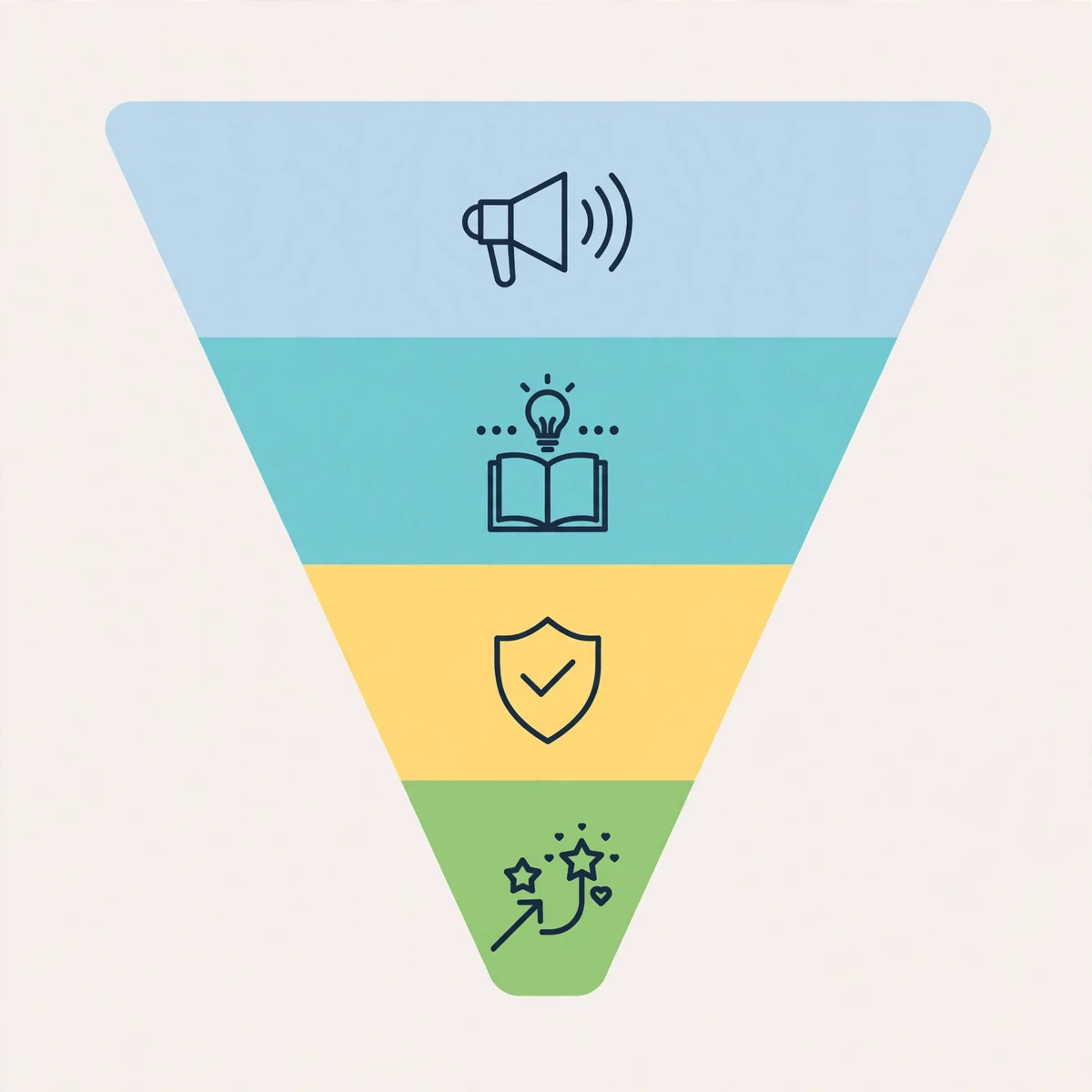
Most teams know the theory. Fewer teams know how to run it when a deal takes two quarters or more to close. If you are building multi-touch pipeline orchestration and lifecycle nurture programs for a long-cycle product, the rest of this guide gives you the stage-by-stage model, the metrics, and the month-by-month cadence to do it.
What is Full Funnel Marketing B2B? (Quick Answer)
Full funnel marketing B2B is a connected strategy that plans, runs, and measures marketing across awareness, consideration, decision, and post-sale expansion, so every touchpoint moves an account toward a closed deal and a lasting customer relationship.
In short, it treats marketing as one continuous system instead of a set of disconnected campaigns. If you want a deeper primer, this definition of full-funnel marketing walks through the core model.
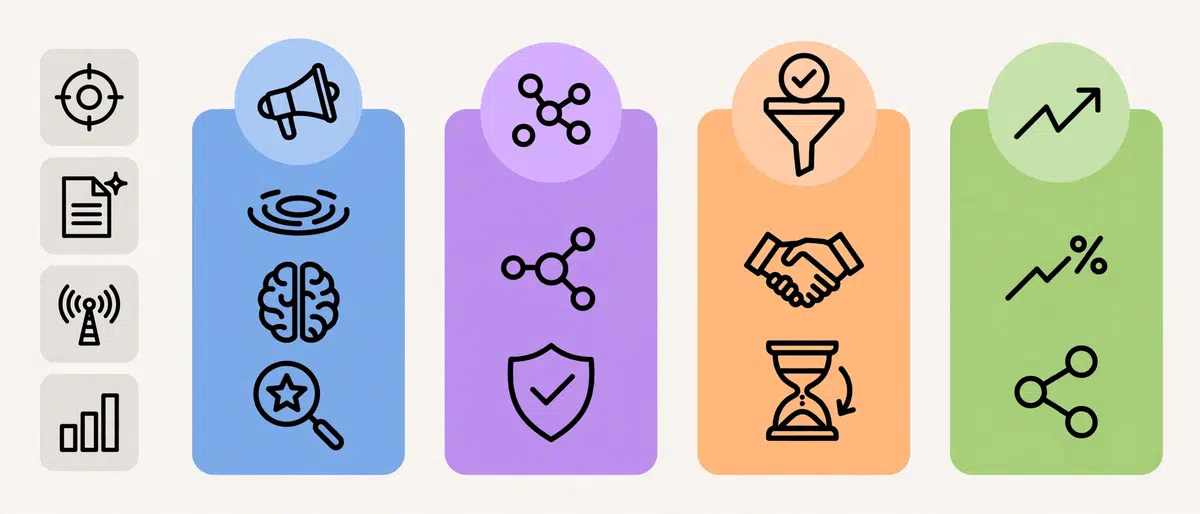
Here is the quick version in four parts:
- Awareness: Reach the right accounts before they start shopping.
- Consideration: Educate the buying committee and prove you understand the problem.
- Decision: Reduce risk, answer objections, and support internal selling.
- Expansion: Retain, upsell, and turn customers into advocates.
Why Standard Funnels Break in 6-12 Month Sales Cycles
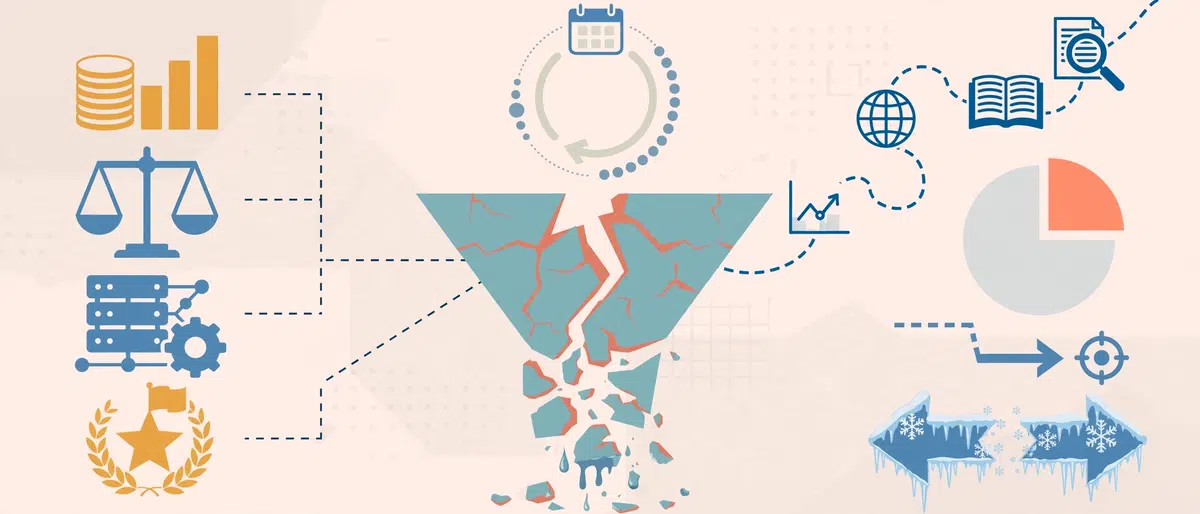
A typical funnel assumes one person, one problem, and one short decision window. B2B deals with long cycles rarely work that way. Consequently, a funnel built for speed leaks badly when the sale drags on.
Consider what changes:
- Buying committees replace single buyers. Deals routinely involve finance, IT, operations, legal, and an executive sponsor.
- Buyers self-educate first. According to Gartner research on the B2B buying journey, buyers spend only a small fraction of the process talking with suppliers. Most of the work happens on their own, across many sources.
- Most of your market is not ready today. The LinkedIn B2B Institute popularized the 95-5 rule: only about 5% of potential buyers are in the market at any moment. The other 95% need to remember you when their moment arrives.
- Priorities shift mid-deal. Budgets freeze, champions leave, and new stakeholders appear. Therefore, your marketing has to keep re-earning attention.
- Sales handoffs go cold. A lead that is not ready for sales in month one often gets ignored until month five.
As a result, a long-cycle funnel needs more depth in the middle, more relevance per stakeholder, and better measurement over time.
Standard funnel vs long-cycle funnel
| Element | Standard B2B Funnel | Long-Cycle Full Funnel (6-12 Months) |
|---|---|---|
| Primary audience | Individual lead | Account and buying committee |
| Middle-of-funnel length | 2-6 weeks | 3-8 months |
| Content depth | Single asset per stage | Role-specific content series per stage |
| Nurture cadence | Weekly emails | Multi-channel, signal-triggered, paced over months |
| Lead handoff | MQL score threshold | Account engagement and buying-stage signals |
| Key metric | Cost per lead | Pipeline velocity, stage conversion, influenced revenue |
| Attribution | Last touch | Multi-touch, account-level |
| Post-sale role | Minimal | Expansion and reference-building |
The Full Funnel Marketing B2B Framework, Stage by Stage
Now that the problem is clear, let’s rebuild the framework for a long cycle. Each stage below has a goal, a content focus, and a metric.
Stage 1: Awareness and demand creation
The goal here is mental availability. You want the right accounts to know your name and associate it with their problem long before they raise a budget request.
Focus on:
- Point-of-view content: Original research, benchmarks, and candid opinion pieces.
- Category education: Explain the problem in plain language, not your product features.
- Paid reach: Use account-targeted LinkedIn and programmatic campaigns to stay in front of your ideal customer profile.
- Thought-leader distribution: Put your subject-matter experts on podcasts, webinars, and industry panels.
For a broader view of how this stage feeds the rest of the funnel, see this guide to full-funnel demand generation.
Stage 2: Consideration and long-cycle nurturing
This stage is where most 6-12 month deals are won or lost. Buyers compare approaches, build internal business cases, and quietly narrow their shortlist.
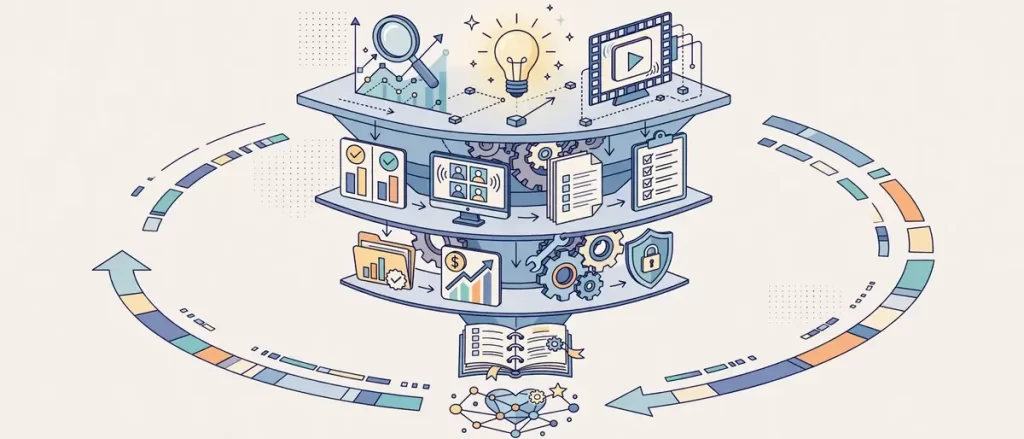
Therefore, your consideration content should:
- Answer “how do we solve this?” before “why should we choose you?”
- Address each stakeholder’s specific concern (cost, risk, integration, compliance).
- Offer self-serve tools such as calculators, assessments, and templates.
- Provide proof through case studies, customer stories, and third-party validation.
Stage 3: Decision and deal acceleration
By now, the buying group is comparing final options. Your job is to remove friction and make the internal sale easier for your champion.
Useful assets include:
- ROI models and business case templates
- Security, compliance, and implementation documentation
- Executive briefing decks written for the CFO and the sponsor
- Reference calls with similar customers
- A clear, low-risk pilot or phased rollout plan
Stage 4: Onboarding, retention, and expansion
Full funnel marketing B2B does not stop at signature. Long-cycle customers often carry the largest lifetime value, so post-sale marketing pays back quickly.
- Onboarding sequences that drive early adoption
- Customer education that deepens product value
- Expansion campaigns timed to renewal windows and usage signals
- Advocacy programs that generate reviews, referrals, and case studies for the next cycle
Full-funnel stage map for long sales cycles
| Stage | Goal | Best-Fit Content | Core Channels | Primary KPIs |
|---|---|---|---|---|
| Awareness | Build recall with in-market and future buyers | Research reports, POV articles, short video | LinkedIn, SEO, podcasts, events | Reach among target accounts, branded search growth |
| Consideration | Educate the committee and earn trust | Guides, webinars, comparison pages, calculators | Email, retargeting, content hubs | Engaged accounts, content depth, MQA rate |
| Decision | Reduce risk and win the deal | ROI models, case studies, security docs | Sales enablement, 1:1 outreach, ABM ads | Opportunity conversion, sales cycle length |
| Expansion | Grow revenue and advocacy | Onboarding, playbooks, QBR decks | Email, in-app, customer marketing | NRR, expansion pipeline, referral volume |
Mapping the Buying Committee Across a Long Funnel

A full funnel marketing B2B plan fails when it speaks to one persona. Long-cycle deals involve several roles, and each one worries about something different.
Typical committee roles and content needs
| Role | Main Concern | Content That Helps |
|---|---|---|
| Executive sponsor | Strategic impact and risk | Executive briefs, industry outlook, peer stories |
| Economic buyer (finance) | ROI, payback, total cost | ROI calculators, pricing guides, business case templates |
| Technical evaluator | Integration and security | Architecture docs, API guides, security reviews |
| End user or manager | Workflow fit and adoption | Demos, product tours, onboarding previews |
| Legal and procurement | Contract and compliance | Terms overview, compliance summaries, SLAs |
How to build the map in four steps
- List every role that touched your last 10 closed-won deals.
- Interview sales and customers to learn each role’s top three objections.
- Assign one content series to each role and each stage.
- Tag every asset in your CRM so you can see which roles engage with what.
Building a Content Engine for a 6-12 Month Cycle
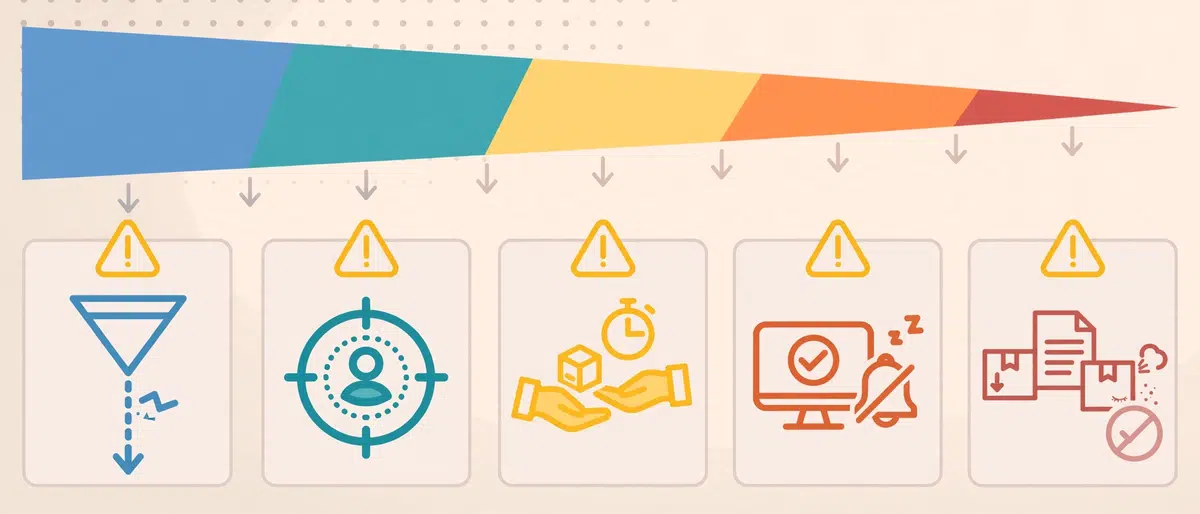
Long cycles demand more content, but not random content. Instead, you need a structured library that meets buyers where they are. This full-funnel content strategy guide covers the planning process in detail.
Here is a practical content mix for the full sales cycle:
- Top of funnel: Original research, trend reports, thought-leadership articles, short-form video
- Middle of funnel: Comparison guides, webinars, solution briefs, interactive assessments
- Bottom of funnel: Case studies, ROI models, implementation plans, security documentation
- Post-sale: Onboarding kits, best-practice playbooks, customer webinars
Google’s own guidance reinforces this approach. The Google Search Central guidance on helpful, people-first content encourages original information, first-hand experience, and clear expertise. Long-cycle B2B content should reflect all three. Include real customer results, named subject-matter experts, and specific data from your own work.
Why gated content needs a rethink
Aggressive gating hurts long-cycle programs. Buyers research anonymously, so forcing a form on every asset shrinks your audience. Instead:
- Keep awareness and education content open.
- Gate only high-intent assets, such as ROI models or custom benchmarks.
- Use intent data and account-level tracking to spot interest without a form fill.
The 12-Month Nurture Calendar for Long-Cycle Deals
Timing matters as much as content. The table below shows a sample pacing model. Adjust it to your average cycle length and deal size.
| Phase | Timing | Marketing Focus | Sample Touchpoints |
|---|---|---|---|
| Discovery | Months 1-2 | Build awareness and first engagement | Research report, LinkedIn ads, expert webinar invite |
| Education | Months 3-5 | Deepen understanding of the problem and options | Guide series, role-based email tracks, retargeting, calculators |
| Evaluation | Months 6-8 | Support comparison and internal business case | Case studies, demo, ROI model, peer roundtable |
| Validation | Months 9-10 | Reduce risk and build consensus | Security docs, pilot proposal, reference calls, executive briefing |
| Decision | Months 11-12 | Remove final friction | Pricing clarity, contract support, implementation roadmap |
| Post-sale | After close | Drive adoption and expansion | Onboarding sequence, QBRs, advocacy invitations |
Two rules keep this calendar healthy. First, trigger touchpoints by behavior, not only by date. Second, slow down when an account goes quiet, and switch to lighter, value-first outreach instead of pushing harder.
Measuring Full Funnel Marketing B2B When Deals Take Months

Cost per lead tells you almost nothing in a 12-month cycle. Consequently, you need metrics that show progress before revenue lands.
The metrics that matter
- Pipeline velocity: How fast qualified opportunities move to closed-won.
- Stage-to-stage conversion: Where deals stall, and why.
- Marketing-qualified accounts (MQAs): Accounts showing buying-group engagement, not single-lead activity.
- Influenced and sourced pipeline: Revenue tied to marketing touches across the journey.
- Sales cycle length: A shrinking cycle signals stronger nurture and better content.
- Net revenue retention: Proof that the funnel keeps working after the sale.
Pick an attribution model that fits the timeline
Last-touch attribution hides the work that happens in months one through eight. Multi-touch models, such as W-shaped or account-based models, give credit to the early and middle touches that shape the deal. If you want to compare approaches with real numbers, review these full-funnel attribution models compared with real data.
Build a leading-indicator dashboard
Because revenue lags, track leading indicators weekly:
- Number of target accounts with 3+ engaged contacts
- Share of committee roles reached per account
- Content consumption depth by stage
- Meetings booked from marketing-engaged accounts
- Opportunities created and advanced per month
Step-by-Step: How to Adapt Your Funnel for a Long Sales Cycle
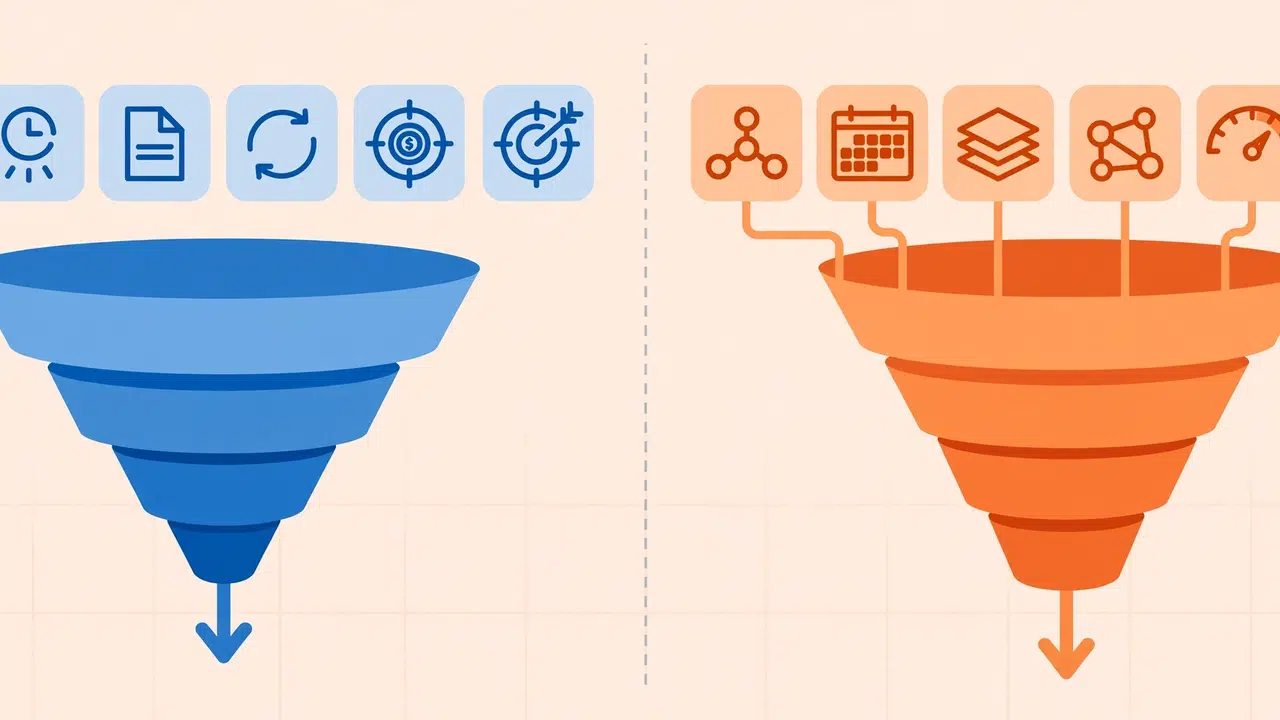
Ready to apply this? Follow the steps below in order.
- Audit your current cycle. Pull the last 20 closed deals. Record the average cycle length, stakeholders involved, and the content each account consumed.
- Define your ideal customer profile and target account list. Prioritize accounts by fit and intent, not by volume.
- Map the buying committee. Document roles, concerns, and objections for each stage.
- Redesign the middle of the funnel. Add role-specific content series and a phased nurture calendar.
- Align marketing and sales on definitions. Agree on what counts as an MQA, a sales-ready account, and an opportunity.
- Choose your attribution model. Set up multi-touch, account-level tracking in your CRM and analytics stack.
- Set up signal-based triggers. Use website behavior, intent data, and email engagement to drive next-best actions.
- Launch, then review monthly. Compare leading indicators, fix stalled stages, and refresh weak content.
Tools and Automation for Long-Cycle Funnels
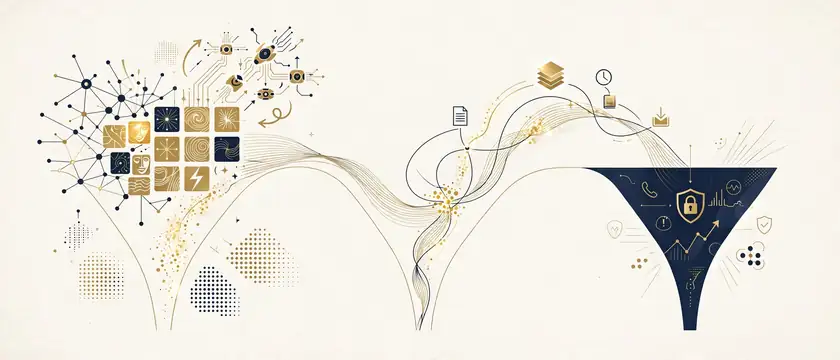
Manual nurturing does not scale across dozens of accounts and hundreds of touchpoints. Therefore, the right stack matters. A solid setup usually includes a CRM, a marketing automation platform, an analytics layer, intent data, and an ABM ad tool. This overview of the full-funnel marketing tech stack explains how these pieces fit together.
When you choose tools, keep three principles in mind:
- Integration first: Data should flow between marketing and sales without manual exports.
- Account-level visibility: Your stack should show engagement by company, not just by contact.
- Simple workflows: Complex automations break easily and hide poor strategy.
Common Mistakes in Full Funnel Marketing B2B
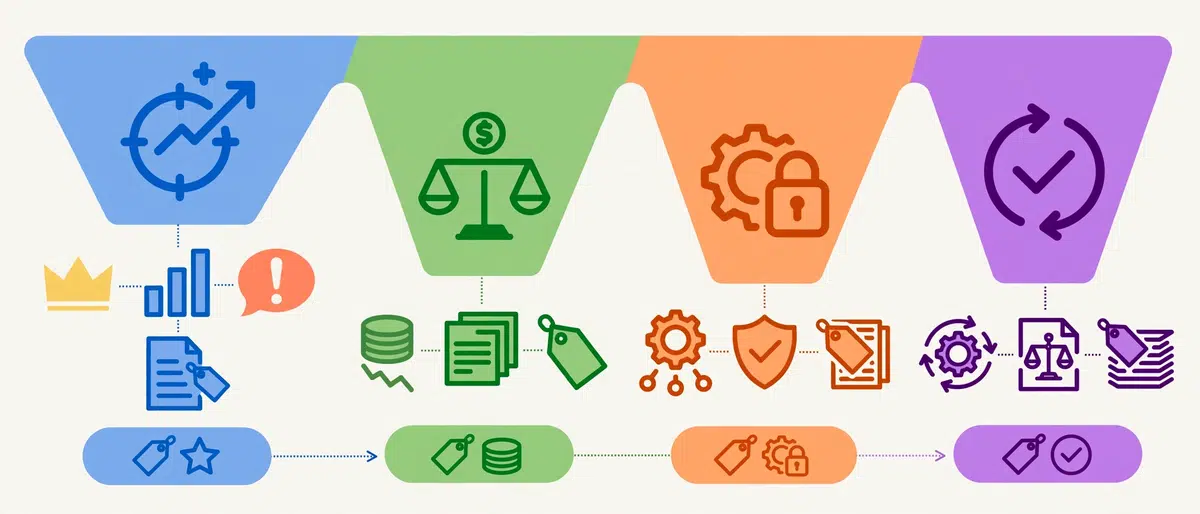
Even strong teams stumble here. Watch for these frequent errors:
- Treating the funnel as linear. Buyers loop back, stall, and jump ahead. Design for that.
- Targeting one persona. Deals die when a single overlooked stakeholder objects late.
- Over-relying on last-click reporting. It undervalues the awareness and education work that starts every deal.
- Handing off leads too early. Sales gets flooded with unready contacts, and trust in marketing drops.
- Going silent after the demo. The evaluation phase is where nurture matters most.
- Ignoring post-sale marketing. Retention and expansion often deliver the strongest return.
- Publishing generic content. Surface-level articles that repeat what everyone else says add no value for readers or for search.
Expert Tips for Long-Cycle B2B Marketers

Use these tactics to improve results quickly:
- Arm your champion. Give your internal advocate a ready-made deck, a one-page business case, and answers to likely objections.
- Publish first-hand proof. Share real numbers, screenshots, and customer quotes. This builds trust with buyers and aligns with Google’s emphasis on experience and expertise.
- Use “dark social” thinking. Buyers share content in private chats and meetings, so make assets easy to forward and understand alone.
- Retarget by stage. Show awareness content to new visitors, and proof content to accounts already evaluating.
- Run win-loss interviews. Ask buyers what convinced them, then feed those insights into your content plan.
- Plan for AI-driven search. Structure answers clearly, cite credible sources, and focus on business outcomes such as pipeline and revenue, not only traffic.
- Review quarterly. Long cycles hide problems, so schedule regular reviews of stage conversion and content performance.
Frequently Asked Questions About Full Funnel Marketing B2B
What is full funnel marketing B2B?
Full funnel marketing B2B is a strategy that connects marketing activity across awareness, consideration, decision, and expansion. It aligns content, channels, and measurement so every stage supports the next and the whole system drives revenue.
How do you adapt full funnel marketing B2B for a 6-12 month sales cycle?
Extend the middle of the funnel, target the entire buying committee, and plan a phased nurture calendar. Measure leading indicators such as engaged accounts and pipeline velocity, and use multi-touch attribution to credit early and mid-funnel work.
What is the best nurture cadence for long B2B sales cycles?
Aim for steady, value-led contact rather than a fixed schedule. Many teams start with one meaningful touchpoint every one to two weeks per role, then adjust based on engagement. Reduce frequency when an account goes quiet, and increase relevance when signals rise.
Which metrics should I track in a long B2B sales cycle?
Track pipeline velocity, stage-to-stage conversion, marketing-qualified accounts, sales cycle length, influenced pipeline, and net revenue retention. Add weekly leading indicators, such as committee coverage and meetings booked, so you can act before revenue results appear.
How does full funnel marketing B2B differ from traditional lead generation?
Traditional lead generation focuses on capturing contacts and passing them to sales. Full funnel marketing B2B covers the entire journey, including demand creation before buyers enter the market and expansion after they buy.
Do I need account-based marketing for long sales cycles?
Not always, but it helps. When deal values are high and buying groups are large, account-based tactics let you focus budget on the right companies and personalize content for each stakeholder.
How long does it take to see results from a full funnel strategy?
You can see leading indicators, such as higher engagement and more multi-threaded accounts, within one to two quarters. Revenue impact usually follows over the length of your sales cycle, so set expectations early with leadership.
Conclusion: Make Your Funnel Match the Way Your Buyers Actually Buy
Full funnel marketing B2B works in 6-12 month cycles when you design for patience, depth, and proof. Build awareness before demand appears, nurture the whole buying committee through a phased calendar, and measure progress with leading indicators and multi-touch attribution. Above all, keep every touchpoint useful, because trust compounds over months.
Start small: audit your last 20 deals, map your buying committee, and rebuild one stage of the funnel this quarter. When you are ready to turn that plan into pipeline, build a full-funnel engine that shortens your sales cycle and grows qualified revenue with a team that does this every day.